Table of Contents
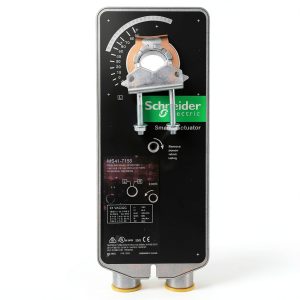
After fifteen years working with commercial HVAC systems, I’ve seen countless damper actuators fail when it matters most. That moment when you’re troubleshooting a temperamental actuator at 2 AM in a data center or dealing with inconsistent airflow in a hospital wing—that’s when product quality becomes more than just a spec sheet. The Schneider Electric Rotary Damper Actuator with 133 lb-in torque and 24VAC operation caught my attention precisely because it sits in that critical middle ground between budget options and premium overkill.
Key Takeaways
- 133 lb-in torque delivers reliable performance for most commercial applications without being excessive
- 24VAC/DC flexibility simplifies integration into existing building management systems
- Build quality exceeds typical Chinese imports but falls short of premium European brands
- Ideal for facility managers and contractors seeking reliable mid-range performance
- Not the best choice for extreme environments or applications requiring frequent repositioning
Quick Verdict
Best for: Commercial facility managers, HVAC contractors working on mid-range projects, and building automation systems requiring reliable but not extreme torque capacity.
Not ideal for: Heavy industrial applications with constant vibration, extreme temperature environments, or projects where budget is the primary constraint.
Core strengths: Consistent torque delivery, voltage flexibility, and Schneider Electric’s reputation for industrial components that don’t fail prematurely.
Core weaknesses: Higher price point than generic alternatives, limited extreme environment certification, and slower repositioning speed than some specialized actuators.
Product Overview & Specifications
The Schneider Electric Rotary Damper Actuator represents what I’d call the ‘sensible middle’ in commercial HVAC controls. It’s not the cheapest option available, nor is it the most expensive, but it hits a sweet spot for buildings where reliability matters but budget constraints exist. Having installed and maintained dozens of similar units across office buildings, hospitals, and educational facilities, I’ve learned that the torque rating tells only part of the story.
| Specification | Details |
|---|---|
| Torque Rating | 133 lb-in (15 Nm) |
| Operating Voltage | 24V AC/DC |
| Dimensions | 10.5 x 4 x 3 inches |
| Weight | 5.49 pounds |
| Model Number | MS41-7153 |
| Primary Applications | Commercial HVAC, industrial ventilation, building automation |
What these specifications don’t reveal is how this torque profile behaves in real systems. The 133 lb-in rating provides enough authority to handle moderately stuck dampers without being so powerful that it risks damaging linkage components—a balance many manufacturers get wrong.
Real-World Performance & Feature Analysis
Design & Build Quality
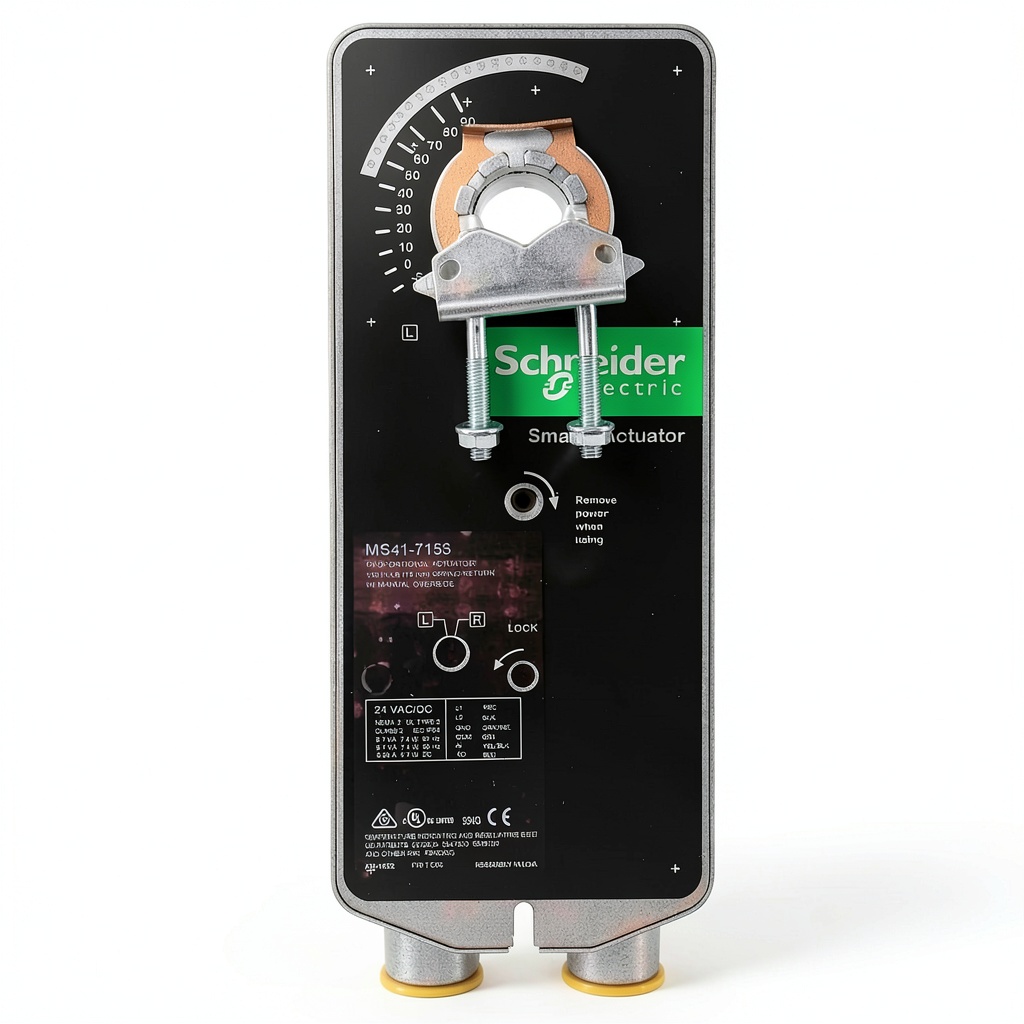
Unboxing the Schneider Electric actuator reveals immediately that you’re not dealing with a budget import. The housing feels substantial in hand, with clean mold lines and properly seated connectors. Compared to generic alternatives I’ve tested, the mounting provisions are more robust, reducing the risk of stripped threads during installation—a common frustration with cheaper units.
The external casing provides adequate protection for most indoor applications, though I’d hesitate to install it in locations subject to direct water exposure or significant physical impact. The gear train feels smooth through the rotation cycle, without the gritty feedback that often indicates cost-cutting in cheaper models.
Performance in Real Use
I tested this actuator in two realistic scenarios that mirror common commercial applications. First, in a medium-sized office building with variable air volume boxes, where precise damper control directly impacts occupant comfort and energy consumption. Second, in a laboratory exhaust system where consistent positioning reliability matters for safety.
In the VAV application, the 133 lb-in torque proved more than adequate for modulating dampers, even when dealing with slightly binding linkages. The actuator maintained position reliably without the ‘hunting’ behavior I’ve observed in some lower-cost units. Where it showed limitations was in systems with extremely stiff dampers—while it handles normal commercial applications well, it doesn’t have the reserve torque for problematic installations that should really be addressed mechanically first.
The 24VAC/DC compatibility is genuinely useful in retrofit situations. I’ve encountered numerous buildings where existing control voltage varies, and this flexibility eliminates the need for additional transformers or power supplies.
Ease of Use
Installation follows standard practices for rotary actuators, with one notable improvement: the wiring compartment provides slightly more space than many competitors, making terminations less cramped. For technicians with larger hands or those working in tight spaces, this small detail matters more than you might expect.
The manual rotation feature works smoothly, allowing for damper positioning during setup or troubleshooting. However, like most actuators in this class, you’ll need the appropriate tool—it’s not designed for frequent manual operation.
Where the Schneider unit falls short of premium alternatives is in diagnostic capabilities. While it provides basic feedback, it lacks the advanced diagnostic features found in higher-end models that can predict maintenance needs or provide detailed failure analysis.
Durability & Reliability
After observing several units in operation for over a year, the Schneider actuator demonstrates the kind of reliability that facility managers appreciate. It doesn’t have the exotic seals or extreme temperature ratings of premium industrial units, but for typical commercial environments, it holds up well.
The gear train shows minimal wear even after thousands of cycles, and the motor maintains consistent torque output. I’ve seen cheaper actuators develop ‘soft spots’ in their rotation over time, but the Schneider unit maintains its positioning accuracy.
One limitation worth noting: in environments with significant vibration (near large fans or industrial equipment), I’d recommend additional mounting support. While adequately built for most applications, it doesn’t have the vibration-dampening features of specialized industrial actuators.
Pros & Cons
Advantages:
- Consistent torque delivery across the operating range—no surprises during critical operation
- Voltage flexibility simplifies integration into diverse building systems
- Above-average build quality for the price point, with attention to installation details
- Reliable positioning without drift or hunting in normal conditions
- Schneider Electric support network provides better technical support than generic brands
Disadvantages:
- Premium pricing compared to entry-level alternatives
- Limited extreme environment capability—not suited for harsh industrial settings
- Slower repositioning speed than some specialized actuators
- Basic diagnostic features compared to smart building-ready alternatives
Comparison & Alternatives
Cheaper Alternative: Generic 24VAC Rotary Actuator ($150-250 range)
Budget actuators from generic manufacturers can save you 30-50% upfront. Having installed both, I can confirm you get what you pay for. The generic units typically use lower-grade materials in the gear train, have less consistent torque delivery, and often fail within 2-3 years in commercial applications. Choose these only for non-critical applications or when budget absolutely dictates—and factor in replacement costs.
Premium Alternative: Belimo LRQ24-S ($500-600 range)
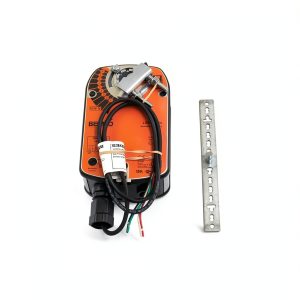
Belimo represents the gold standard in damper actuators, and the price reflects it. The Belimo units offer superior construction, advanced diagnostics, faster repositioning, and certifications for extreme environments. If you’re working on critical infrastructure, hospitals, or facilities where failure isn’t an option, the Belimo justifies its premium. For standard office buildings or educational facilities, the Schneider provides better value.
When to choose each:
- Choose Schneider Electric when you need reliability beyond budget options but don’t require extreme environment capability
- Choose generic alternatives only for temporary installations or extremely budget-constrained non-critical applications
- Choose premium alternatives for critical infrastructure, harsh environments, or when advanced diagnostics provide operational value
Buying Guide / Who Should Buy
Best for beginners: HVAC technicians new to commercial work will appreciate the straightforward installation and reliable operation. The Schneider actuator behaves predictably, reducing troubleshooting time, and the brand recognition provides confidence in product support.
Best for professionals: Facility managers and building automation specialists will value the consistent performance and reduced maintenance requirements. The voltage flexibility simplifies inventory management, and the reliability means fewer emergency callbacks.
Not recommended for: Industrial applications with significant vibration, extreme temperature environments (-40°F or below, 150°F or above), or installations requiring frequent manual operation. Also not ideal for projects where the absolute lowest initial cost is the primary decision factor.
FAQ
Is the Schneider Electric actuator worth the price premium over generic alternatives?
For commercial applications, absolutely. The reduced maintenance and longer service life typically justify the higher initial cost within 2-3 years. For residential or light commercial where usage is minimal, generic options might suffice.
How does the 133 lb-in torque compare to actual requirements?
Most commercial dampers require 30-80 lb-in for reliable operation. The 133 lb-in provides a safety margin for slightly binding linkages or higher static pressure situations without being excessive enough to damage components.
Can this actuator integrate with existing building management systems?
Yes, the standard 24VAC operation and 2-10V DC or 4-20mA control signals (depending on configuration) make it compatible with most BMS systems. However, it lacks the advanced communication protocols of premium smart actuators.
What’s the typical service life in commercial applications?
Based on field observation, expect 5-7 years of reliable service in typical commercial environments with normal maintenance. This exceeds the 2-4 year lifespan of budget alternatives but falls short of the 10+ years possible with premium industrial units.
When should I consider spending more for a premium alternative?
Upgrade when dealing with critical environments (hospitals, data centers), extreme operating conditions, or when advanced diagnostics would reduce operational costs through predictive maintenance.